


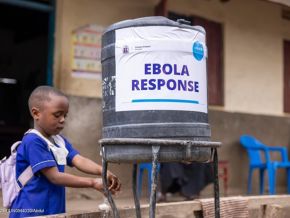
The Bundibugyo Ebola outbreak was reported in another African country this week. Kenya confirmed its first imported case. Meanwhile, Côte d’Ivoire is tackling a yellow fever outbreak. In Nigeria, Borno state has recorded more than 68,000 suspected cholera cases, while rabies is spreading across 16 states. Five African countries are working to reach zero-dose children, and Ghana is strengthening its vaccine self-reliance.
Disease surveillance: Progress in Africa in the third quarter of 2026
The World Health Organization’s (WHO) Regional Office for Africa published its health emergency surveillance report for the third quarter of 2026. Forty-six of its 47 member states now have genomic sequencing capabilities. Forty-four states participate in the Integrated Disease Surveillance and Response (IDSR) system, which recorded a 94% completion rate for weekly data reporting. About 74% of outbreaks were detected within seven days of onset, with a median interval of one day between detecting a signal and verifying it.
During the reporting period, 126 new signals were identified through the EIOS epidemic and pandemic intelligence system. The system now operates in 44 of the 47 member states and uses automated speech-to-text conversion and machine learning classification.
More than 50,000 GeneXpert cartridges were deployed to decentralize mpox testing. Fifty-one laboratories in 32 countries recorded an 89.4% pass rate in an external quality assessment (EQA) for mpox.
These advances, however, come amid intense pressure from outbreaks, including Ebola in the Democratic Republic of Congo (DRC), cholera and Lassa fever in Nigeria, and mpox in several countries.
Mental health in Togo: Women turn to hairdressers before doctors, study finds
Ahead of World Mental Health Day, the Bluemind Foundation published the Trust Study on October 8. The study was conducted from April to June 2026 among 576 women in four cities in the West African country of Togo: Lomé, Kara, Sokodé and Dapaong.
The findings raise questions about the path to care. When they have a problem, 41% of clients first turn to their families, 30% to their hairdressers and fewer than 1% to a health professional. Among clients who took part in interviews, 89% said they tell their hairdressers things they do not share anywhere else.
All the hairdressers surveyed said they had noticed a client was struggling before she mentioned it. Ninety-nine percent of clients said they would be open to a referral to a health professional if their hairdresser suggested it.
The findings come against a backdrop of chronic shortages in Togo, which has fewer than 10 psychiatrists for more than 9 million people, according to WHO. Nearly 150 million people in Africa live with a mental health condition, and fewer than one in 10 receive any support.
However, the study, which used mixed methods including questionnaires, interviews and focus groups, measures neither therapeutic effects nor causal impact. It documents a relationship of trust and raises a public policy question: What happens before people enter the health care system, and how can that trust guide them toward professional care?
Mental health in Gambia: Young people break the silence and challenge taboos
Four young Gambians, Lamin Fofana, Aisha Sarr, Isatou Saho and Aji Jacob Njie, have worked since November 2025 to challenge taboos around mental health. Their efforts followed an online WHO regional workshop on child and youth mental health.
Fofana created community and online spaces where young people share their experiences. Sarr trains peers to recognize when help is needed. Saho, a nursing student, encourages peers to view seeking help as an act of courage. Njie advocates greater investment in health care facilities.
At a regional workshop on Africa’s mental health targets for 2030 in Lomé in July 2026, Saho co-led discussions on addiction and digital mental health. Sarr co-led a session on suicide prevention.
In Gambia, stigma is a major barrier to conversations about stress, anxiety and depression. Seeking help can be seen as a social risk.
Ebola: Kenya confirms first imported case, patient dies
Kenya confirmed its first case of Bundibugyo virus disease on October 6, 2026, becoming the fourth country affected by the regional outbreak after DRC, Uganda and France.
The deceased patient was a Kenyan national living in DRC. After initially receiving care at several Congolese health facilities, he traveled by road to Kampala, Uganda, on October 2, passing through Beni. He was hospitalized and isolated upon arriving in Nairobi on October 3. He died on the night of October 5 despite intensive supportive care. He was buried on October 6 under the national protocol for safe and dignified burials.
Kenyan authorities identified 28 direct contacts, including family members and health care workers. Investigations are continuing to trace 23 passengers and four crew members who were on the same flight. More than 652,000 travelers have been screened at high-risk points of entry. Isolation units have also been identified in 27 counties.
Meanwhile, WHO reiterated that it advises against any travel or trade restrictions involving DRC, Uganda or Kenya.
DR Congo: Nearly 9,000 Ebola cases reported
As of October 6, 2026, the Bundibugyo virus disease outbreak in DRC had recorded 8,728 confirmed cases, 4,205 deaths and 2,269 recoveries, with a case fatality rate of 48.2%. The outbreak affected 64 health zones across seven provinces, with Alimbongo in North Kivu recently added. Ituri remains the epicenter, with 6,480 cases, or 74.3% of the total, and 2,989 deaths, despite a slight weekly decline. North Kivu recorded 1,755 cases and 1,013 deaths, with a case fatality rate of 57.7%, the country’s highest. The contact follow-up rate stood at 80.4% on October 4, below the 85% target.
WHO also confirmed the medical evacuation to the Netherlands of a Dutch health care worker who tested positive on October 1. This was the second imported case in Europe after the case in France in June 2026.
France increases its funding
Support is increasing in response to an outbreak that has raised serious concern. France is increasing its financial contribution to the Ebola response in DRC. Overall funding needs exceed $1 billion, and disbursements remain slow. The six-month response plan requires $1.3 billion, while the revised humanitarian plan is estimated at $2.1 billion.
On the ground, burials are a particular concern. Traditional ceremonies held without health precautions are thought to be responsible for 60% of new deaths. To curb transmission and ease tensions with residents, medical teams are working with local and religious leaders to ensure safe burials that respect families. The strategy also aims to rebuild public trust in health teams, several of whose members have been attacked in some areas. Africa CDC stressed that community trust remains essential to an effective response and that the funding shortfall undermines the continuity of field operations.
Clinical trial of new treatments begins in Ituri
A clinical trial to identify effective new treatments for Bundibugyo Ebola virus disease has begun in Ituri, according to WHO. The PARTNERS trial is assessing several antiviral drug candidates, including MBP134, remdesivir and obeldesivir, at five sites in Ituri during an active outbreak. At present, there is no approved vaccine or specific treatment for Bundibugyo virus. By contrast, the Ervebo vaccine for Zaire virus has been licensed since 2019. Doses of Ervebo had nevertheless been deployed experimentally under a clinical research protocol.
Launching the trial in an active conflict zone poses major logistical challenges. Insecurity makes it harder for teams to travel and follow up with patients. By the end of August, more than 300 patients had already been enrolled.
Meanwhile, Africa CDC and WHO are working to speed up access to interim results so treatment protocols can be adapted if there are signs of efficacy.
Yellow fever in Côte d’Ivoire: 14 confirmed cases, two deaths and a risk of cross-border spread
In West Africa, Côte d’Ivoire is facing a yellow fever outbreak documented through August 23, 2026. According to Outbreak News Today, citing WHO, the country recorded 14 confirmed cases, including seven confirmed by polymerase chain reaction (PCR) testing and seven by plaque reduction neutralization testing (PRNT), as well as two deaths, with a case fatality rate of 14.3%.
Cases were reported in eight health districts: Doropo (five cases), San Pedro (two), Téhini (two), and Agboville, Bouna, Danané, Jacqueville and Toulepleu (one each). Testing was carried out by the Institut Pasteur de Côte d’Ivoire, with confirmation by the Institut Pasteur de Dakar.
Thirteen of the 14 people infected had not been vaccinated at the time of infection. Cases in forested areas suggest sylvatic transmission involving forest mosquitoes rather than the typical pattern of urban transmission. Yellow fever is caused by a flavivirus transmitted by Aedes and Haemagogus mosquitoes. The vaccine provides lasting immunity, generally for life. WHO highlights the risk of cross-border spread, linked to low vaccination coverage in some areas, population movements and proximity to borders.
Cholera in Nigeria: Nearly 69,000 suspected cases and 394 deaths in Borno state
By the end of September, Borno state in northern Nigeria was facing a large cholera outbreak. According to WHO, 68,152 suspected cases and 394 deaths had been recorded since the outbreak began in May 2026. The response focused on bringing treatment units closer to the hardest-hit communities, particularly in hard-to-reach areas where displaced people live in poor conditions.
Borno hosts one of the largest displaced populations in West Africa as a result of years of insecurity. The strategy combines disease surveillance, training for community workers, distribution of oral rehydration solutions, chlorination at water points and targeted cholera vaccination.
Nigeria: One Health approach used to fight rabies
Also in Nigeria, more than 100 animal rabies cases were recorded between January and August 2026 in 16 states. Health authorities have strengthened their prevention strategy through the One Health approach, which brings together human, animal and environmental health.
The approach includes vaccinating dogs, the main source of transmission to humans, raising awareness of what to do after a bite, and strengthening surveillance capacity in high-risk areas. Rabies is almost always fatal once symptoms appear, but can be prevented through animal vaccination and post-exposure prophylaxis (PEP).
The United Nations health agency estimates that the disease causes between 21,000 and 55,000 deaths a year in Africa, with substantial underreporting and limited access to rabies vaccines in many rural areas.
Vaccination: Five African countries coordinate efforts to reach zero-dose children
Senegal, Côte d’Ivoire, Gabon, Djibouti and Gambia met in Dakar from September 29 to October 2, 2026, to develop shared strategies to reach zero-dose children, defined as those who have received none of the essential vaccines. The initiative is led by Galien Africa in partnership with Senegal’s Health Ministry, WHO, UNICEF, the Institut Pasteur de Dakar and the Gates Foundation. The five delegations agreed on 21 priority actions in four areas: strengthening domestic vaccine funding, improving governance across the health and education sectors and local authorities, accelerating the digitization of data systems, and increasing community participation.
Approaches presented included Tracker, a digital tool for tracking individuals. Active use of the tool rose from 50% to more than 90% of workers after on-site support. Mobile teams working from 4 p.m. to 8 p.m. reach families who are unavailable during the day. An initiative called Ronde des jeunes filles uses peer outreach to improve human papillomavirus (HPV) vaccination coverage. These countries aim to reduce their dependence on external funding by involving local authorities and the private sector.
Ghana: Vaccine sovereignty and expanded HPV coverage
Ghana has established a national mechanism for prioritizing vaccines based on expected health benefits, equity and financial sustainability. The process relies on NITAG, the national committee of immunization experts responsible for setting priorities amid rising costs and declining external funding. This approach reflects a broader shift toward national control of immunization policy across the continent.
Meanwhile, Ghana is expanding HPV vaccination in Western North region, using strategies that complement vaccination in schools to reach girls who are not in school. Between May and August 2026, 1,823 girls were vaccinated in the region, including 526 who were not in school, through home visits, community sessions and the involvement of local leaders. Cervical cancer is among the most common cancers in African women. HPV vaccination before exposure to the virus is the main means of prevention.
Zambia: 60 professionals trained in emergency response under AVOHC-SURGE
More than 60 Zambian health professionals completed seven days of training under AVoHC-SURGE, a joint initiative of Africa CDC, the African Union’s health agency, and WHO, funded by the United Kingdom.
Zambia is the 32nd country in the African region to introduce the training, which brings together participants from the Health Ministry, the Zambia National Public Health Institute (ZNPHI), the Agriculture Ministry and the military. The aim is to build teams that can deploy within 24 to 48 hours, including to provide cross-border support.
The national SURGE roadmap calls for an active roster of trained responders, stronger public health emergency management centers at national and provincial levels, and regular simulation exercises. “The strength of an emergency response rests on teams that know what to do, can work together and are ready to act,” said Dr. Clement Peter Lasuba, WHO’s representative in Zambia.
Mpox in Angola: Media work with emergency operations center to combat misinformation
Angolan health authorities have involved journalists in the work of the Centre des opérations d’urgence de santé publique (COESP), the public health emergency operations center in Luanda, as part of the response to mpox. The mpox tally had reached 796 confirmed cases and two deaths since 2024. The center centralizes surveillance data, tracks the progression of outbreaks and guides decisions on vaccination, treatment and team mobilization.
Secretary of State for Health Carlos Pinto de Sousa asked the media to turn technical data into accessible messages to curb misinformation and public alarm. WHO’s representative in Angola, Indrajit Hazarika, stressed that the center’s data guide every part of the response, from case investigations to vaccination.
Ayi Renaud Dossavi